


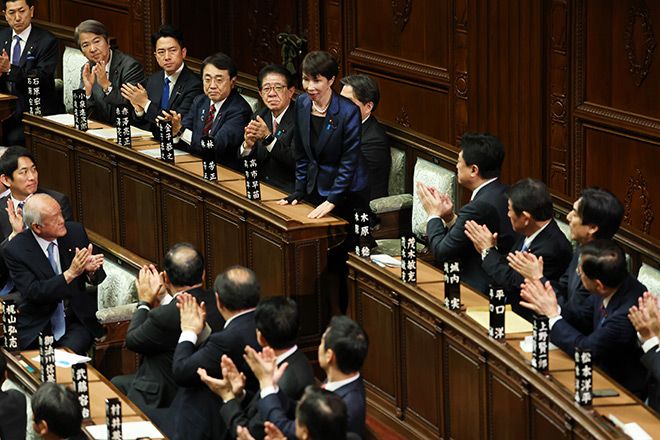
Fresh off a landslide election victory, Sanae Takaichi was re-elected as Japan’s 105th prime minister on Feb. 18 during a special Diet session.
She is set to immediately reappoint her Cabinet as she prepares to use her party’s supermajority to push a delayed national budget through parliament.
Given that her administration is only four months old, Takaichi plans to reappoint all the ministers.
Her immediate priority is the swift passage of the fiscal 2026 budget, a task complicated by the very Feb. 8 election that strengthened her mandate.
The 150-day special Diet session, which runs until July 17, will kick off with Takaichi’s policy address on Feb. 20.
She is expected to call for economic growth through investment and unveil a public-private road map in March for advanced technologies and growth sectors.
Party representatives will then question her on the address in both houses Feb. 24-26, after which the Lower House Budget Committee will begin its deliberations.
Deliberations are already significantly delayed because Takaichi dissolved the Lower House in January for the snap election, leaving a 16-day campaign period.
While passing the budget by the end of the fiscal year in March is widely seen as difficult, the prime minister is adamant about achieving it.
At an LDP executive meeting on Feb. 17, she urged members to work together to pass these bills as soon as possible.
To speed the process, proposals are circulating within the ruling coalition to reduce questioning time or postpone intensive budget deliberations.
However, if the coalition uses its three-fourths majority in the Lower House to force these measures through, it could draw intense criticism for “disregarding the will of the Diet.”
Later in the session, the focus will shift to controversial legislation that Takaichi has championed.
The government aims to pass a bill creating a National Intelligence Agency to centralize intelligence gathering and begin formal debate on a “spy prevention law.”
The ruling coalition also intends to create the crime of “damaging the national emblem of Japan” and accelerate discussions on revising the Constitution and the Imperial House Law.
Earlier in the day, the Lower House also elected Eisuke Mori of the LDP, a former justice minister, as speaker and Keiichi Ishii of the Centrist Reform Alliance (Chudo), a former Komeito party leader, as deputy speaker.
link